

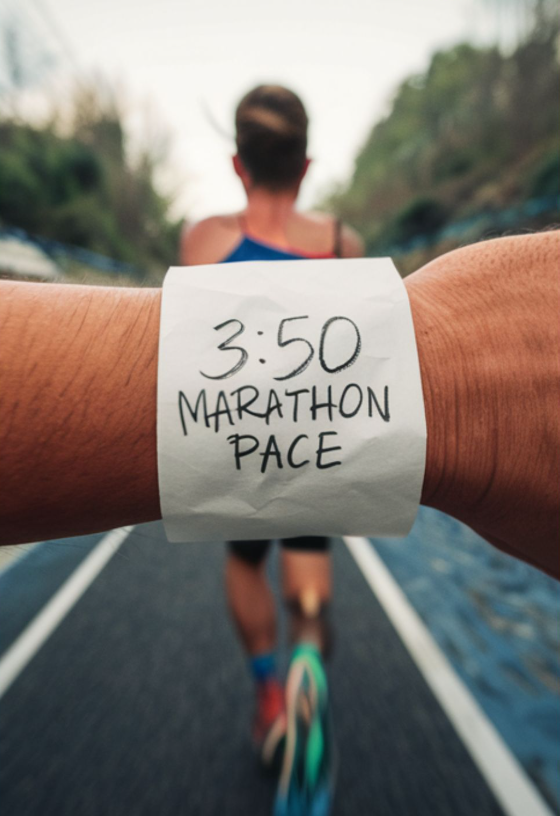
Half Marathon Pace Chart: Turning "I Want to Finish in Under 2 Hours" Into a Real Plan
Saying you want to finish a half marathon in under two hours is a wish. Knowing you need to hold 9:10 per mile to get there is a plan. That's the shift a half marathon pace chart creates, and a half marathon pace calculator sharpens it further by working from your exact goal instead of a rounded-off number on a printed table.
Half Marathon Pacing, Broken Down: Charts, Calculators, and the Weeks It Takes to Get There
Thirteen point one mile is a long way to find out your pacing was wrong. That's why a half marathon pace chart tends to be the first thing a coach puts in front of a new runner, before shoe recommendations, before nutrition talk, before anything else. Push the opening miles too hard, and the bill comes due later, usually somewhere past mile ten, when there's nowhere left to hide.
A half marathon pace calculator earns its keep by looking at what you've actually been running lately, your long run splits, your recent tempo efforts, rather than assigning you a pace based on a vague label like "intermediate." That distinction matters a great deal here, because a pacing miscalculation over 13 miles snowballs in a way it simply doesn't over a 5K.
Is the pace I want within reach of where my fitness sits right now?
Broken into seconds per mile, how big is that gap really?
Will race day splits come from mile markers, or is this a metric course?
With the training time I've got left, am I chasing something realistic?
The Math That Sits Behind Every Half Marathon Pace Chart
Nothing complicated is happening here. Take the finish time you want and spread it out evenly over 13.1 miles, or 21.1 kilometers.
Finding Yourself Inside the Half Marathon Pace Range
There's no gold-standard number that separates a "real" half marathon runner from anyone else. Two people can finish minutes apart, and both walk away having run the exact race their training built them for.
Pace also drifts a bit run to run, depending on how you slept, how hot it is outside, or how to beat up your legs feel that particular morning.
Your Half Marathon Numbers, Laid Out
| Category | What It Comes To |
|---|---|
| Minutes Per Mile | Around 9:45 to 12:15 for most consistent runners |
| Minutes Per Kilometer | Around 6:04 to 7:37 for most consistent runners |
| Race Distance | 13.1 miles / 21.1 kilometers |
| Laps If You Trained on a Track | Roughly 52 laps |
| World-Class Pace | A touch over 4 minutes per mile |
| Where New Racers Usually Sit | 12:15 to 15:30 per mile |
A Few Numbers That Tend to Surprise People
Averaged across every finisher on record, half marathon pace lands close to 10:50 per mile worldwide.
Men typically cross the line having held about 9:50 to 10:20 per mile.
Women typically cross the line having held about 10:50 to 11:30 per mile.
If your first half marathon lands you at 12:15 to 15:30 per mile, that's the norm, not a problem to fix.
A runner who holds 7:00 per mile evenly the whole way and a runner who holds 14:00 per mile just as evenly both finish stronger than someone who takes off too fast and falls apart around mile ten.

A Half Marathon Race Pace Chart Built from Your Goal Time Backward
Setting a finish time gives your weeks of training an actual target to measure against instead of a vague hope. Someone chasing a 2:10 finish, as one example, needs to average about 9:55 per mile, a pace that's absolutely within reach after three or four months of steady, well-structured buildup.
Plenty of strong half marathon results come from running the first several miles a touch conservatively, then holding steady or even picking things up later, rather than trying to lock in the exact same pace from mile one to mile thirteen.
| Target Finish | Pace Needed Per Mile | Pace Needed Per Km |
|---|---|---|
| 1:30:00 | 6:52/mile | 4:16/km |
| 1:45:00 | 8:01/mile | 4:59/km |
| 2:00:00 | 9:10/mile | 5:41/km |
| 2:15:00 | 9:55/mile | 6:10/km |
| 2:30:00 | 11:27/mile | 7:07/km |
| 2:45:00 | 12:36/mile | 7:50/km |
| 3:00:00 | 13:44/mile | 8:32/km |
Using a Half Marathon Time Pace Chart to Look at Other Distances
Once you've got a real number for your half marathon pace, it doubles as a useful benchmark for thinking about other races too, whether you're eyeing something shorter for speed work or a full marathon somewhere down the road.
This becomes especially handy if you're racing more than one distance in a season, say a fall 10K followed by a spring half marathon.
| Distance | Miles | Kilometers | Versus Your Half Marathon Pace |
|---|---|---|---|
| 5K | 3.1 | 5 | 60 to 90 seconds quicker per mile |
| 10K | 6.2 | 10 | 20 to 40 seconds quicker per mile |
| 15K | 9.3 | 15 | 10 to 20 seconds quicker per mile |
| Half Marathon | 13.1 | 21.1 | Your reference point |
| Marathon | 26.2 | 42.2 | 20 to 40 seconds slower per mile |
The Buildup: Getting Your Legs Ready for Race-Day Pace
If you can already handle a continuous 45 to 60 minute run, a 10 to 12 week buildup usually does the trick.
Early Weeks, 1 to 3: Get Your Legs Moving Regularly — Four to five easy, relaxed runs a week, building your long run toward 6 or 7 miles by the end of this stretch. Leave pace out of it completely for now.
Mid Block, Weeks 4 to 6: Figure Out What Pace Feels Like Naturally — Once a week, actually check your watch during a run and notice what pace feels sustainable without forcing it. stretch your long run out to 8 or 9 miles.
Sharpening Phase, Weeks 7 to 9: Bring in Goal Pace — Every other week or so, tuck 10 to 15 minutes of goal pace into the second half of a long run.
Peak Weeks, 10 and 11: Your Biggest Effort of the Block — This is where your long run peaks, usually around 11 or 12 miles, with goal pace segments stretching to 20 or 25 minutes inside it.
Race Week: Back Off and Save It — Come race morning, hold off on speeding up during mile one, no matter how easy the pace feels. That restraint is usually what's left standing between you and a rough final 5K.
Which Training Window Fits Where You're Starting
| Your Starting Point | How Long to Plan For | Main Thing to Work On |
|---|---|---|
| Never Run Distance Before | 14 to 16 weeks | Steady weekly mileage and longer runs, built gradually |
| Run a Couple Times a Week | 10 to 12 weeks | Adding goal pace stretches into existing long runs |
| Consistent Runner, No Specific Race Goal | 8 to 10 weeks | More time spent training at threshold-level effort |
| Trying to Beat a Previous Result | 8 to 10 weeks | Tempo work, negative splits, disciplined pacing |
| Coming Back From a Layoff | 12 to 14 weeks | Safely rebuilding mileage before adding speed back in |

Sanity-Checking the Pace on Your Half Marathon Pace Chart
A pace that's actually right for you should feel tough but sustainable through the middle of the race, not like you're barely hanging on. Your training allows you to build real comfort with that effort by practicing it directly, comfort that carries over when nerves and crowds show up on race day.
Where Dasher Personalized Running Fits into Your Half Marathon Pace Chart
Dasher Personalized Running builds coaching plans around exactly that kind of detail. Whether this is your first half marathon or you're chasing down a time that's slipped away from you before, our coaches start with your target goals and training experience.
-
Start with your desired finish time and use a half marathon pace chart to identify the average pace required per mile or kilometer.
-
A half marathon running pace chart makes it easier to connect your running speed with a potential finish time. It can support goal setting, race preparation and pacing decisions, particularly if you are trying to improve a previous half marathon performance.
-
Easy runs are generally slower, while tempo and race-specific sessions may be closer to your target half marathon race pace. Your training plan should include different intensities rather than using one pace for every run.
-
Practicing your target half marathon race pace during selected workouts can help you become comfortable with the effort required while also showing whether your goal is achievable.
-
Yes. A half marathon pace chart can help you plan how quickly you should aim to run throughout the race.
-
Small pace changes are normal, especially when dealing with hills, wind, crowds or fatigue. Instead of reacting to every minor variation, use the half marathon running pace chart as a general reference and focus on maintaining a controlled effort that supports your overall race goal.
-
Definitely. Experienced runners can use a half marathon race pace chart to establish more precise targets for personal-best attempts, pacing workouts and race strategies.
-
Comparing these results with a half marathon pace chart can help you select a finish-time goal that is challenging but appropriate for your current fitness.
-
Yes. Your planned pace may need to change when conditions make running harder. Rather than forcing the exact number shown on a half marathon running pace chart, consider maintaining a sustainable effort and adjusting your pace according to the course and weather.
-
Once you have selected your goal, use the half marathon pace chart to identify your target pace and incorporate it into relevant training sessions.